Safe, Smart, Connected:
A Digital Learning Series


Each week starting on February 10th the PTA will share important information on their website for our families. This learning series aims to empower families to navigate the digital world with confidence, beginning with core principles highlighted during Safer Internet Day.
Main topic areas for 2026:
Generative AI
Media literacy and critical thinking
Civility
Picking on peers
Wellness, identity and self-respect
Scams, predators and creeps
Part 1: Safer Internet Day
Safer Internet Day (Feb. 10, 2026) is an international education and awareness-raising effort, celebrated in over 100 countries. Led by ConnectSafely in the United States, it’s a day to bring communities together to discuss challenges families face navigating the digital world, and empowers them to use technology responsibly, respectfully, critically and creatively. This year’s events will provide resources and engaging activities for PTA leaders, families and children.
2025 Program: Smart Digital Parenting: Navigating Screens with Children & Teens
The internet opens the world up for our kids….but sometimes that can mean parts of the world we don’t want them to experience. Proactively setting boundaries and expectations for healthy online behaviors within families is important, but having these conversations is not always easy. Kids want to be granted the freedom to navigate their online lives independently and often know more about technology than their parent or caregiver.
This virtual session hosted in partnership with National PTA will explore:
Scams
Sextortion
Screen time strategies
Talking to our kids and teens about strangers online
Kerry’s “Play the tape forward” strategy
How to talk to your kids about using AI in school
Online bullying & harassment
This year’s Safer internet Day covered topics which included: Generative AI, Civility, Picking on Peers, Wellness, Identity and Self-respect, Media Literacy and Critical Thinking, Scams, Predators and Creeps. Click the buttons below to access additional details and resources for your family to explore on each topic from ConnectSafely.org. You’ll have access to parent guides, informational videos, Q&As, as well as content from childnet.com.
Part 2: Safer Internet Day-Related Articles from ConnectSafely & PTA Partners
Part 3: Be Internet Awesome

Every family engages with technology in its own way. National PTA and Google offer products and resources that help you shape the experience that’s right for your household and support healthy digital habits. Whether you want to help your child explore the internet safely or guide them toward high-quality content on YouTube, tailored tools empower kids and teens to watch, listen, play, learn, create, and communicate online with confidence.
This part of the series highlights family-focused solutions and provides practical tools to help you start conversations with your children about navigating the internet responsibly and engaging with online video thoughtfully.
The following material is provided from Google in partnership with National PTA.
Additional resources can be found at g.co/BeInternetAwesome
This Be Internet Awesome program is part of a larger National PTA initiative called PTA Connected, which empowers families with knowledge, tools and resources around online safety and digital parenting. National PTA has teamed up with Google to provide resources for parents and caregivers across the nation.
We all know it is tough raising families in a digital age. This program will explore what it means to be a good digital citizen and how we can all help each other to stay safe online.
The Internet opens the world up for our kids….but sometimes that can mean parts of the world we don’t want them to experience: sharing too much information; stumbling upon inappropriate content; and online bullying. Smartphones (and tablets) put information at our fingertips...but sometimes they can distract from real world experiences. This is having an impact on personal relationships, physical health, ability to focus and quality of sleep.
While the use of technology continues to grow around us, we can mold the types of relationships we want to have with tech by proactively setting boundaries and expectations for healthy online behavior within our families.
But, how do you do this?
It can be tricky talking to your kids about online safety, things are always changing, right when you think you’ve got it there is something new to learn.
Digital citizenship is a term that is so new for many families. But it is the guidelines that will help keep our families having safe online experiences and our goal is to give you the tools to start these important conversations here tonight, so that you can continue to have them with each other at home.
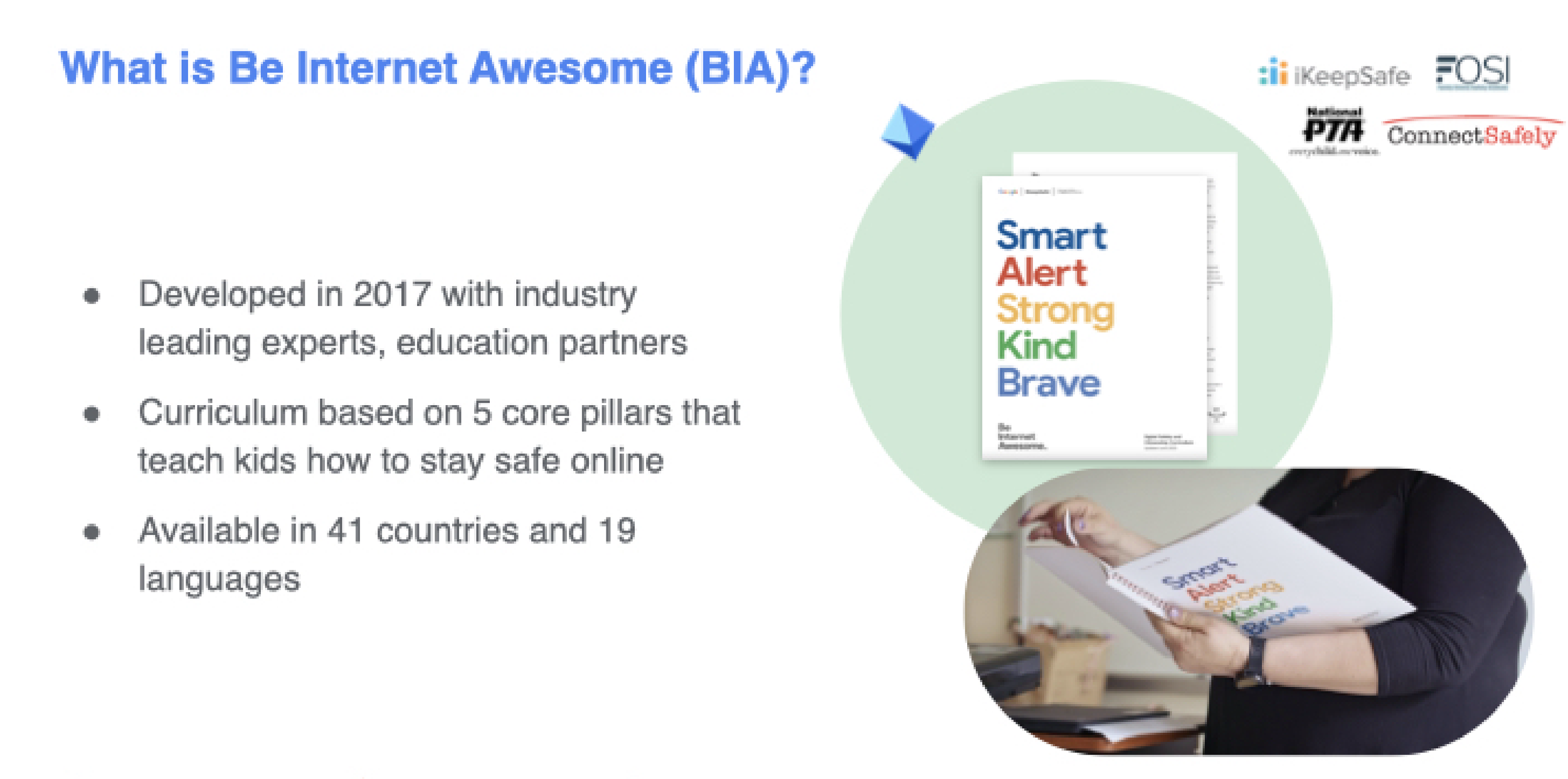
Be Internet Awesome was developed in 2017 with industry leading experts and education partners and is built to be a resource that organizes digital citizenship into five areas to make digital safety an easy family conversation.
The curriculum features a Family Guide that drives into each lesson, providing background information about the topic area, vocabulary, discussion starters and practice scenarios to help families proactively set boundaries and expectations for healthy online behavior. Throughout this presentation we will provide an overview for you on the content and examples of how we teach kids the curriculum.

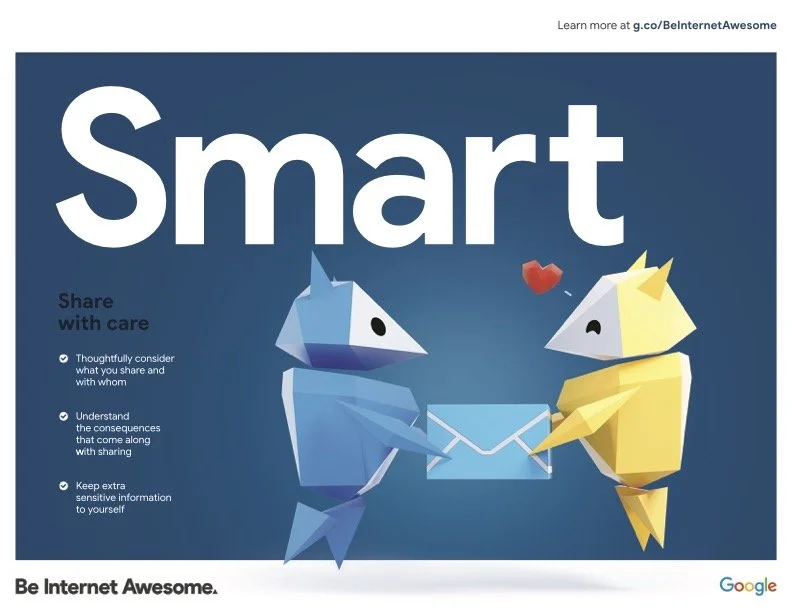
Let’s look at the first concept: Be Internet Smart.
Being internet smart focuses on two types of skill building: sharing within the family (each other’s devices, accounts, passwords) and sharing outside the family (personal information, photos, friending within games).

The section on Being Internet Alert helps kids become aware that what they see online isn’t always true, real or reliable.
Learning to think critically about search results and how search engines work is one of the most basic and useful skills families can learn together.
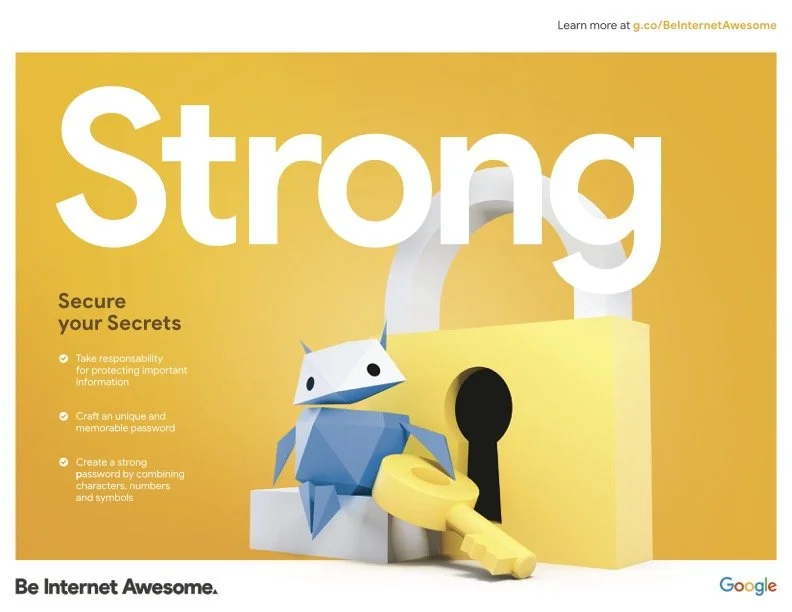
In Be Internet Strong, you will look at why digital security matters and learn how to create strong passwords.
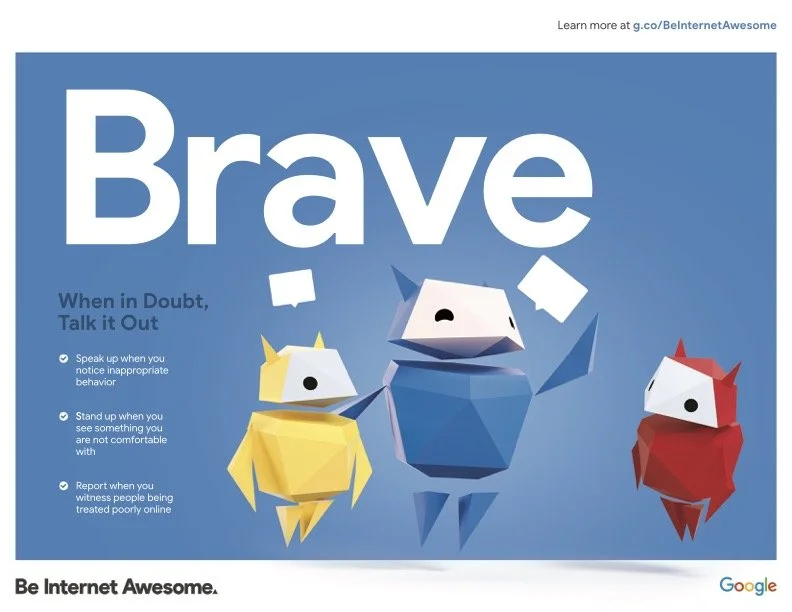
It’s brave to talk about things that make us uncomfortable, but no one likes having these types of conversations.
Kids should know that they are not on their own when they see inappropriate content or behavior online. They should never hesitate to get help from you or another adult they trust.
Being Internet Brave establishes the options that we all have for getting help both on and offline.
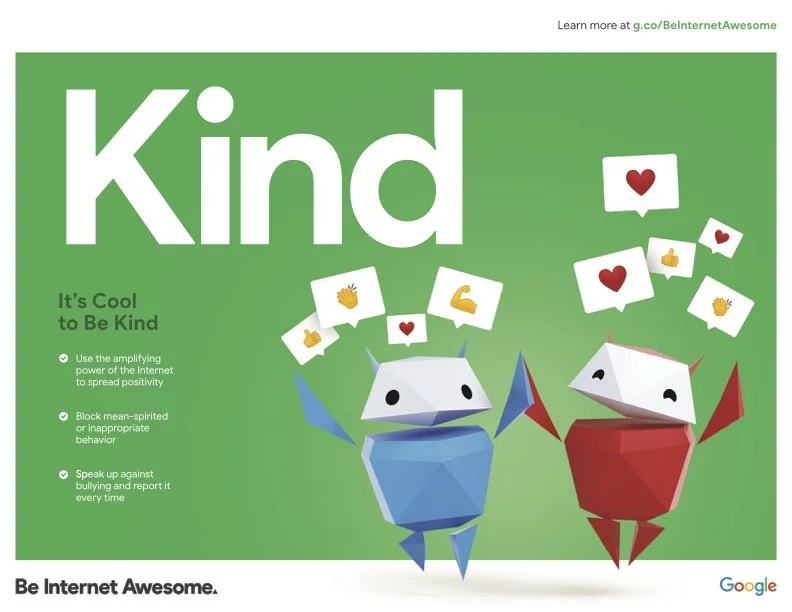
With Be Internet Kind you can define what positive behavior looks like in your family, create an understanding on how to spread positivity online and learn how to identify situations where it is better to wait and communicate face to face or to ask a parent or trusted adult for help.
For more information, please see Google’s Family Guide